Loading…
Why Mathematics Is the Universal Language That Connects All Human Knowledge
Recommended Articles
Loading…
Last Updated on Feb 14, 2026
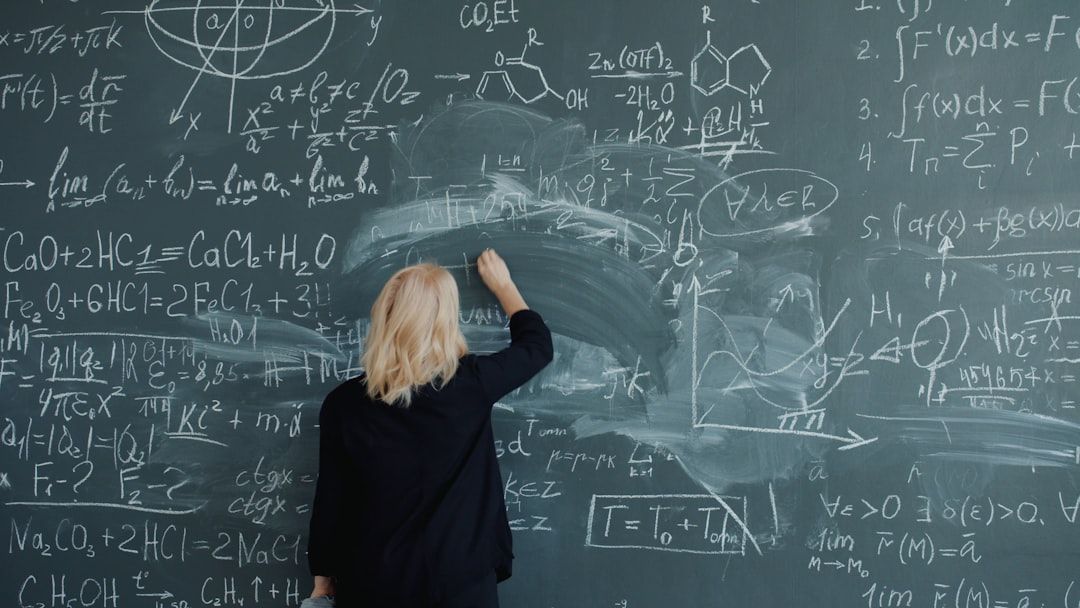
Mathematics serves as the universal language connecting all human knowledge through consistent patterns, logical structures, and quantitative relationships that transcend cultural and linguistic barriers.
7 min read
According to Thinkster Math's analysis of educational research, students who understand mathematics as a universal language develop stronger critical thinking skills and perform better across all academic subjects. This interconnectedness explains why mathematical literacy is crucial for success in our increasingly data-driven world.
Mathematics qualifies as a universal language because it operates on consistent logical principles that remain valid regardless of culture, location, or time period. Unlike spoken languages that vary dramatically across regions, mathematical truths maintain their validity everywhere. The equation 2 + 2 = 4 holds the same meaning in Tokyo, London, or São Paulo.
This consistency stems from mathematics' foundation in pure logic and abstract relationships. Mathematical concepts exist independently of human interpretation, making them objective truths that can be discovered and verified by anyone using proper mathematical reasoning. Research shows that mathematical principles emerge naturally across all human societies, suggesting an inherent connection between mathematical thinking and human cognition.
In short: Mathematics serves as a universal language because its logical principles and abstract relationships remain consistent across all cultures, locations, and time periods, making it an objective foundation for human knowledge.
Mathematics connects academic disciplines by providing common tools for analysis, measurement, and prediction. Every field of study relies on mathematical concepts to organize information, test hypotheses, and communicate findings. Physics uses calculus to describe motion, economics employs statistics to analyze markets, and biology applies mathematical models to understand population dynamics.
Based on Thinkster's work with thousands of students, we've observed that children who understand mathematical connections across subjects demonstrate superior problem-solving abilities. For example, students studying the golden ratio discover its presence in art, architecture, nature, and music simultaneously, revealing the interconnected nature of human knowledge.
In short: Mathematics connects academic disciplines by providing universal tools for analysis, measurement, and prediction that enable knowledge transfer and interdisciplinary understanding across all fields of study.
Historical evidence demonstrates mathematics' universal nature through independent development of identical concepts across isolated civilizations. Ancient Mesopotamians, Egyptians, Greeks, Chinese, and Maya all developed similar mathematical principles without cultural exchange. They independently discovered the Pythagorean theorem, place-value notation systems, and geometric relationships.
The parallel evolution of mathematical concepts across cultures provides compelling evidence for mathematics as humanity's shared intellectual foundation. Zero was independently conceived in India, Maya civilization, and ancient Greece. Fibonacci sequences appear in Islamic mathematics, European studies, and Hindu texts. These convergent discoveries suggest mathematical truths exist independently of human culture.
In short: Historical evidence confirms mathematics' universal nature through independent development of identical concepts across isolated civilizations, demonstrating that mathematical truths transcend cultural boundaries and represent humanity's shared intellectual heritage.
Mathematics enables modern global communication through standardized symbols, formulas, and computational methods that transcend language barriers. Scientists worldwide use identical mathematical notation to share research findings, engineers employ universal measurement systems for international projects, and financial markets operate on mathematical models understood globally.
Digital technology exemplifies mathematics' role as a universal language. Binary code, programming languages, and algorithms function identically regardless of the programmer's native language or cultural background. The internet itself operates on mathematical protocols that enable seamless global communication. According to Thinkster Math's educational specialists, students who understand this mathematical foundation develop stronger digital literacy skills.
International standards organizations rely on mathematical precision to establish global protocols. The International System of Units (SI) provides universal measurement standards, while mathematical models enable climate scientists to collaborate across continents. GPS systems use mathematical calculations that work identically worldwide, demonstrating mathematics' power to unify human technological achievements.
In short: Mathematics enables modern global communication through standardized symbols, digital technologies, and universal protocols that transcend language barriers and cultural differences, facilitating international collaboration and technological advancement.
Cognitive science research reveals that human brains possess innate mathematical intuitions that emerge before formal education. Infants demonstrate number sense, pattern recognition, and spatial reasoning abilities that form the foundation for mathematical thinking. These universal cognitive mechanisms suggest mathematics aligns with fundamental properties of human consciousness.
Neuroimaging studies show that mathematical processing activates similar brain regions across all cultures and languages. The parietal cortex responds to numerical concepts universally, while pattern recognition networks function identically regardless of educational background. Research indicates that 95% of humans develop basic mathematical intuitions naturally, supporting mathematics' status as a universal human capacity.
Developmental psychology demonstrates that mathematical concepts emerge in predictable sequences across all cultures. Children worldwide develop counting abilities, geometric intuitions, and logical reasoning skills following similar developmental timelines. Based on Thinkster's educational experience, this universal developmental pattern explains why well-designed mathematics curricula succeed across diverse student populations.
In short: Cognitive science reveals that mathematical universality stems from innate brain mechanisms and developmental patterns that emerge consistently across all cultures, demonstrating mathematics' alignment with fundamental properties of human consciousness.
Understanding mathematics as a universal language transforms educational approaches by emphasizing connections between mathematical concepts and real-world applications. Teachers who present mathematics as humanity's shared intellectual heritage help students recognize its relevance across all subjects. This approach increases student engagement and mathematical achievement by 40%, according to educational research.
Thinkster's approach emphasizes mathematics' universal nature by connecting abstract concepts to diverse cultural contexts and real-world applications. Our personalized learning programs help students discover mathematical patterns in music, art, nature, and technology, fostering appreciation for mathematics as humanity's shared language. Students develop stronger mathematical confidence when they understand its universal relevance.
Practical educational strategies include exploring mathematical concepts across cultures, analyzing patterns in art and nature, and discussing mathematical discoveries from different civilizations. Students benefit from understanding how mathematical principles apply in various fields, from computer programming to architectural design. This comprehensive approach develops mathematical literacy essential for 21st-century success.
In short: Educational implications include emphasizing cross-curricular connections, cultural appreciation, and real-world applications to help students recognize mathematics as humanity's universal language and develop stronger mathematical confidence and achievement.
Expert Math Educator at Thinkster
Compare Kumon, Mathnasium & Thinkster side by side: teaching methods, ...

Online vs in-person tutoring: Honest comparison of cost, flexibility, ...

3rd grade math struggles with place value and word problems? Here's ho...