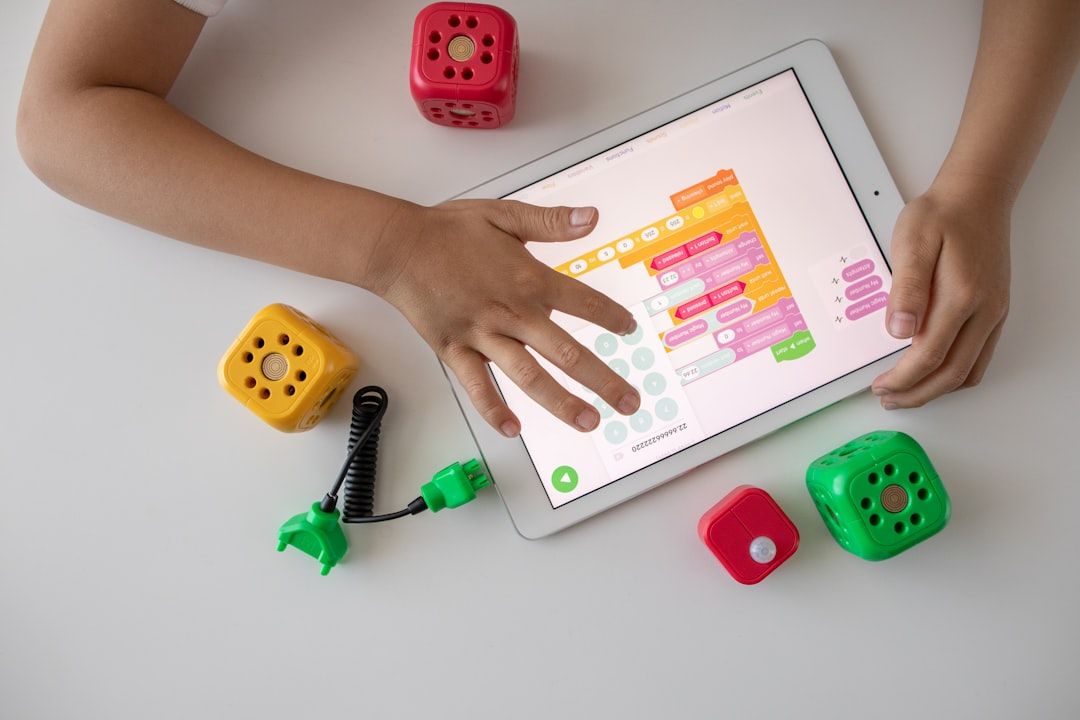
Are you tired of watching your child struggle with multiplication tables despite hours of practice? Memorization might help them pass a test, but does it build the foundation they need for more advanced math?
As parents, we often focus on having our children commit the times tables to memory without ensuring they truly grasp the concepts behind multiplication.
This comprehensive guide explores effective strategies that go beyond rote learning to help your child develop a deeper understanding of multiplication – one that will serve them throughout their math journey.
TL;DR - Key Takeaways
- Rote memorization of multiplication tables often leads to short-term recall but fails to build conceptual understanding necessary for advanced math.
- Visualization techniques, array models, and connecting multiplication to real-world scenarios significantly improve comprehension and retention.
- Using manipulatives and interactive games makes multiplication more concrete and engaging, helping children grasp the underlying concepts.
- Recognizing patterns within multiplication tables helps children develop mathematical thinking beyond simple memorization.
- A positive learning environment with consistent practice, patience, and celebration of progress supports deeper mathematical understanding.
Reviewed by: Certified K-12 educators and math learning specialists at Thinkster Learning.
What Is an AI Tutor?
Quick Answer: An AI tutor is an intelligent digital learning system that uses algorithms and adaptive technology to deliver personalized math instruction, provide immediate feedback, and adjust lessons based on a student's performance patterns and learning needs.
AI tutors represent the cutting edge of educational technology, designed to simulate many aspects of human teaching through sophisticated algorithms and machine learning.
These digital platforms analyze student responses, identify knowledge gaps, and adapt learning materials in real-time to address individual needs.
Modern AI tutoring systems employ various technologies to enhance the learning experience:
- Adaptive learning engines that modify difficulty and content based on student performance
- Natural language processing to interpret student questions and provide contextual explanations
- Data analytics to track progress and identify patterns in learning
- Gamification elements to increase engagement and motivation
- Visualization tools to represent abstract concepts graphically
Popular AI tutoring platforms like Thinkster integrate these technologies to create comprehensive learning environments that can support students across various mathematical concepts, including multiplication tables.
How AI Tutors Support Math Learning
Quick Answer: AI tutors support math learning by providing adaptive practice, instant feedback, visual representations, and data-driven insights that help identify and address specific areas where a student might be struggling with multiplication concepts.
When it comes to teaching multiplication tables, AI tutors excel in several ways:
- Pattern recognition: AI systems can identify when a student consistently struggles with specific multiplication facts (like the 7s or 8s times tables) and provide targeted practice.
- Visual learning support: Many AI platforms offer interactive visual models, such as arrays or number lines, to help students see multiplication relationships rather than just memorize facts.
- Adaptive practice: Instead of drilling all multiplication facts equally, AI tutors can focus on facts the student finds challenging while occasionally reviewing mastered content to reinforce learning.
- Progress tracking: Detailed analytics show parents and students exactly which multiplication facts need more attention and how understanding is developing over time.
For example, an AI tutor might notice that a student quickly solves 5×6 but consistently struggles with 6×7. The system would then provide more practice with 6×7, perhaps showing visual array models to strengthen conceptual understanding before returning to practice.
What Is a Human Tutor?
Quick Answer: A human tutor is a professional educator who provides personalized, one-on-one instruction tailored to a student's specific learning style, pace, and needs, offering real-time guidance, emotional support, and adaptive teaching strategies.
Human tutors bring personal connection and educational expertise to the learning process. These trained professionals work directly with students, building relationships that support academic growth and confidence development.
Unlike standardized teaching methods, human tutoring offers a customized approach that adapts to individual learning styles and emotional needs.
Traditional human tutoring typically involves:
- Regular one-on-one or small group sessions
- Personalized lesson plans based on student needs
- Direct observation of student work and thought processes
- Real-time adjustments to teaching methods
- Emotional encouragement and motivation
- Building trust and rapport over time
Human tutors may be certified teachers, subject matter experts, or experienced educators who specialize in working with students of specific age groups or with particular learning needs.
How Human Tutors Approach Multiplication
Quick Answer: Human tutors teach multiplication by identifying a child's specific learning style, using hands-on activities, creating emotional connections to the material, and adapting their approach in real-time based on the child's responses and body language.
When teaching multiplication tables, experienced human tutors employ several effective approaches:
- Assessing conceptual foundations: Human tutors first ensure students understand what multiplication represents before focusing on memorization.
- Customized explanations: They adjust language and examples based on a child's interests and background knowledge, making multiplication relevant to the child's life.
- Multimodal teaching: Human tutors seamlessly switch between verbal explanations, visual models, physical manipulatives, and written work based on how the child responds.
- Emotional support: They recognize when a student becomes frustrated or disengaged and can provide encouragement or change approaches to maintain a positive learning environment.
- Making connections: Human tutors help students see relationships between multiplication facts (like how 4×8 relates to 2×8) to build a web of understanding rather than isolated facts.
For instance, a human tutor might notice a child's eyes light up when talking about basketball and then create multiplication word problems involving basketball scores or player statistics to engage the student more effectively.
Pros and Cons of AI Tutors
Quick Answer: AI tutors offer 24/7 availability, consistent quality, instant feedback, and data-driven insights at lower costs, but lack emotional intelligence, struggle with complex reasoning, and cannot fully replicate the human connection that motivates many students.
When considering AI tutoring for multiplication tables, it's important to understand both the strengths and limitations of these digital learning tools.
| Pros of AI Tutors | Cons of AI Tutors |
|---|---|
| 24/7 accessibility for learning anytime | Limited emotional intelligence and motivation |
| Consistent quality across all sessions | Difficulty adapting to unique learning challenges |
| Immediate feedback on practice problems | Less effective for developing deep conceptual understanding |
| Personalized pacing based on performance | Technology barriers for some families |
| Lower cost than traditional tutoring | Cannot read body language or emotional cues |
| Data-driven insights and progress tracking | May reinforce algorithmic thinking over creativity |
| Gamification elements enhance engagement | Potential for technical glitches or system limitations |
Advantages of AI Tutors for Multiplication Learning
Quick Answer: AI tutors excel at providing unlimited practice opportunities with instant feedback, adapting to a child's pace, visualizing multiplication concepts consistently, and offering detailed performance analytics that identify specific multiplication facts needing attention.
Unlimited Practice with Instant Feedback
AI tutoring platforms allow students to practice multiplication facts repeatedly without judgment or tutor fatigue.
This consistent availability means children can practice when they're most receptive to learning, whether that's early morning or late evening.
The immediate feedback loop corrects misconceptions before they become ingrained, a crucial factor when learning multiplication tables.
Adaptive Learning Paths
Modern AI tutors use sophisticated algorithms to detect patterns in student responses.
For example, if a child consistently struggles with multiplying by 7, the system will automatically provide additional practice, explanations, and visualizations specifically for these facts while reducing focus on well-mastered facts.
Thinkster Learning's adaptive platform, for instance, identifies exactly which multiplication facts need reinforcement and adjusts the learning path accordingly, ensuring efficient progress.
Detailed Performance Analytics
AI systems track every response, capturing data on accuracy, speed, and patterns of errors.
This creates comprehensive learning profiles that show precisely where a student excels or struggles with multiplication.
Parents and teachers can review these insights to provide targeted support.
Cost-Effectiveness and Accessibility
AI tutoring typically costs significantly less than human tutoring, making quality multiplication instruction more accessible to families of all income levels.
Many platforms offer basic services at affordable monthly rates, removing financial barriers to supplemental math education.
Limitations of AI Tutors for Math Education
Quick Answer: AI tutors struggle with detecting conceptual misunderstandings beyond wrong answers, cannot provide emotional encouragement tailored to a child's needs, and may miss opportunities to connect multiplication to a child's specific interests or experiences.
Limited Emotional Intelligence
While AI can adapt content based on performance, it cannot truly understand a child's emotional state or motivation.
When a student becomes frustrated with challenging multiplication facts, AI cannot provide the genuine empathy, encouragement, or motivation that human connection offers.
Difficulty Addressing Complex Reasoning Gaps
AI systems excel at identifying when answers are incorrect but often struggle to pinpoint the exact nature of conceptual misunderstandings.
For example, if a child consistently multiplies 6×7 as 36, an AI might offer more practice but might not recognize the student is confusing multiplication with squaring (6×6).
Technology Barriers
Not all families have reliable internet access or appropriate devices for AI tutoring platforms.
Technical difficulties can disrupt learning sessions, creating frustration that interferes with multiplication practice.
Additionally, screen time concerns may limit how long children can engage with digital tutoring.
Missing Contextual Understanding
AI tutors lack awareness of a child's daily experiences and interests that could make multiplication meaningful.
A human tutor might know to connect multiplication to a child's passion for collecting cards or playing sports, creating relevant examples that resonate personally.
Pros and Cons of Human Tutors
Quick Answer: Human tutors provide personalized emotional support, can identify subtle learning barriers, adapt teaching methods in real-time, and build motivating relationships, but they are typically more expensive, have limited availability, and quality can vary significantly between tutors.
Human tutoring brings distinct advantages and limitations to multiplication table instruction.
| Pros of Human Tutors | Cons of Human Tutors |
|---|---|
| Strong emotional connection and motivation | Limited availability (scheduled sessions only) |
| Ability to detect subtle conceptual misunderstandings | Higher cost compared to AI solutions |
| Real-time adaptation to learning difficulties | Quality varies between individual tutors |
| Creative explanation approaches when students struggle | Scheduling challenges for busy families |
| Development of executive function skills alongside content | Geographic limitations (for in-person tutoring) |
| Relationship building that enhances learning motivation | Potential tutor-student personality mismatches |
| Ability to integrate cultural contexts and student interests | Inconsistent availability during holidays/breaks |
Benefits of Human Tutors for Multiplication Understanding
Quick Answer: Human tutors excel at building emotional connections that motivate students, detecting subtle misunderstandings through conversation, creating custom explanations based on each child's interests, and modeling flexible thinking about multiplication concepts.
Emotional Support and Motivation
A skilled human tutor creates a safe environment where students feel comfortable making mistakes while learning multiplication.
This emotional connection helps children persist through challenging concepts, particularly important for students who have developed math anxiety or negative associations with times tables.
The encouragement and celebration of progress that human tutors provide cannot be fully replicated by AI systems.
This emotional support builds confidence that extends beyond multiplication to overall mathematical self-efficacy.
Contextual Understanding and Flexibility
Human tutors excel at detecting subtle signs of confusion or misunderstanding through a child's expressions, tone of voice, or hesitations.
They can immediately pivot their teaching approach based on these observations.
For instance, if a tutor notices a student counting on fingers for certain multiplication facts, they might introduce skip counting strategies or visual models before resuming practice.
This flexibility allows for addressing the root causes of multiplication difficulties rather than just the symptoms.
Customized Learning Connections
Experienced tutors get to know their students' interests, hobbies, and daily experiences, then leverage these connections to make multiplication meaningful.
A tutor who knows a student loves baseball might create multiplication word problems involving batting averages or team statistics, making abstract concepts concrete and personally relevant.
Development of Mathematical Reasoning
Beyond teaching multiplication facts, human tutors model mathematical thinking and reasoning.
They can engage students in discussions about patterns in the multiplication table, relationships between facts, and strategies for deriving unknown facts from known ones—building conceptual frameworks that support deeper understanding.
Drawbacks of Human Tutoring for Math Learning
Quick Answer: Human tutoring for multiplication has significant limitations including higher costs making regular sessions unaffordable for many families, scheduling constraints that limit practice frequency, variable teaching quality among tutors, and potential personality mismatches that can affect learning effectiveness.
Cost Considerations
Quality human tutoring typically costs $40-100 per hour, making regular sessions financially challenging for many families.
This high cost often results in less frequent tutoring sessions, which can slow down mastery of multiplication tables that benefit from consistent practice.
Limited Availability and Scheduling Challenges
Human tutors are available only during scheduled sessions, typically once or twice a week.
This creates gaps between instruction that can hinder retention of multiplication facts.
Additionally, coordinating schedules between busy families and tutors can be difficult, especially for families with multiple children or complex work schedules.
Inconsistent Quality and Approaches
The effectiveness of human tutoring varies significantly based on the tutor's experience, training, and personal teaching style.
Some tutors may excel at building strong mathematical foundations, while others might focus more on procedural mastery without developing conceptual understanding of multiplication.
Geographic and Logistical Limitations
In-person tutoring requires either travel to the tutor's location or having the tutor come to your home, adding time and logistical challenges.
While online tutoring eliminates geographic barriers, it may lack some of the advantages of face-to-face interaction when teaching mathematical concepts that benefit from physical demonstration.
AI Tutor vs Human Tutor: Detailed Comparison Table
Quick Answer: AI and human tutors have complementary strengths for teaching multiplication: AI tutors excel in availability, consistency, and data analytics, while human tutors provide superior emotional support, conceptual explanation, and adaptability to unique learning needs.
When choosing the best approach for helping your child understand multiplication tables, consider these key differences between AI and human tutoring options:
| Comparison Factor | AI Tutors | Human Tutors | Hybrid Model |
|---|---|---|---|
| Availability | 24/7 access whenever the child is ready to learn | Limited to scheduled sessions, typically 1-3 hours per week | Scheduled human sessions with unlimited AI practice between sessions |
| Cost | $10-30/month for subscription-based programs | $40-100/hour depending on qualifications and region | Moderate cost combining subscription with reduced human tutoring hours |
| Personalization Approach | Algorithm-driven based on performance data | Intuitive and relationship-based with personalized examples | Data-informed human coaching enhanced by AI performance insights |
| Feedback Speed | Immediate response and correction for every problem | Varied pace based on session flow and tutor attention | Immediate AI feedback for practice with deeper human analysis in sessions |
| Emotional Support | Limited to programmed encouragement and game elements | Strong ability to provide genuine encouragement and build confidence | Human emotional support informed by AI-identified struggle points |
| Conceptual Teaching | Structured explanations and visual models, but limited adaptation | Creative, multi-approach explanations tailored to student reactions | AI-based conceptual foundations with human refinement and extension |
| Tracking Progress | Comprehensive data analytics on all practice attempts | Subjective assessment with limited quantitative tracking | Rich data analytics with expert human interpretation |
| Identifying Misconceptions | Can identify patterns of errors but may miss underlying causes | Skilled at detecting subtle misconceptions through conversation | AI flags potential issues for targeted human investigation |
| Technology Requirements | Requires device and internet access; potential technical issues | Minimal for in-person; basic video conferencing for online | Requires reliable technology but includes human backup support |
| Best For | Regular practice, fact fluency, independent learners | Building conceptual foundations, overcoming math anxiety | Comprehensive multiplication mastery with understanding and fluency |
Key Differences in Teaching Multiplication
Quick Answer: AI tutors excel at providing consistent practice opportunities with immediate feedback for multiplication facts, while human tutors better identify conceptual misunderstandings and create personalized explanations that connect multiplication to a child's experiences and interests.
Approach to Personalization
AI tutoring systems personalize multiplication practice based on performance data—focusing more time on facts the student answers incorrectly or slowly.
This data-driven approach ensures efficient practice but may not address the "why" behind a student's struggles.
Human tutors personalize through relationship and observation. They might notice a student using inefficient counting strategies for certain multiplication facts and introduce specific mental math techniques tailored to that student's thinking style.
Conceptual Understanding Development
AI tutors typically present multiplication concepts through standardized visualizations and explanations, which work well for many students but offer limited alternatives when these approaches don't connect.
Human tutors can try multiple explanation angles in real-time. If array models don't click for a student, a human tutor might immediately switch to skip counting, grouping physical objects, or relating multiplication to the student's real-life experiences like organizing collections or sharing items.
Motivation and Engagement Strategies
AI platforms rely heavily on gamification, rewards, and visual engagement to maintain student interest in multiplication practice.
These extrinsic motivators can be effective but may not build intrinsic motivation for mathematical understanding.
Human tutors build motivation through relationship and relevance.
They help students see why multiplication matters in their lives and create a supportive environment where students want to succeed not just for rewards but to meet expectations and experience the satisfaction of mastery.
When Each Option Works Best for Multiplication Learning
Quick Answer: AI tutors work best for consistent practice, fact fluency development, and progress monitoring, while human tutors excel when children need conceptual rebuilding, emotional support for math anxiety, or have unique learning challenges that require creative teaching approaches.
Ideal Scenarios for AI Tutoring
- A child needs extensive practice to build fluency with already-understood concepts
- Regular, short practice sessions would benefit the student more than occasional longer sessions
- Parents want detailed analytics to monitor progress across all multiplication facts
- The student is comfortable with technology and responds well to digital engagement
- Budget constraints make frequent human tutoring sessions prohibitive
Ideal Scenarios for Human Tutoring
- A child has developed math anxiety or negative associations with multiplication
- Significant conceptual gaps need rebuilding through varied approaches
- Previous learning attempts have been unsuccessful, suggesting need for creative alternatives
- A child strongly benefits from relationship-based learning and encouragement
- Complex learning differences require specialized teaching approaches
When Hybrid Tutoring Offers Optimal Support
- Balanced development of both conceptual understanding and fact fluency
- Budget allows for some human coaching but not frequent full sessions
- Value data-driven instruction but also recognize the importance of human connection
- Child would benefit from consistent practice between tutoring sessions
- Seeking long-term mathematical success beyond just multiplication mastery
Programs like Thinkster Learning offer this balanced approach, combining the strengths of both tutoring models to develop multiplication understanding alongside broader mathematical thinking skills.
Why Rote Memorization Isn't Enough
Quick Answer: Rote memorization of multiplication tables fails to build conceptual understanding, leads to fragile knowledge that's easily forgotten, doesn't develop mathematical reasoning skills, and often creates math anxiety that persists through later grades.
Many of us learned multiplication tables through repetitive drills and flashcards.
While this approach helps some children pass tests in the short term, research consistently shows that memorization without understanding creates significant limitations for mathematical development.
The Limitations of Memorization
Quick Answer: Memorization without understanding creates fragile knowledge that doesn't transfer to new problems, fails to build connections between mathematical concepts, and often leads to rapid forgetting once drilling stops.
Creates Fragile Knowledge
When children memorize multiplication facts without understanding the underlying concepts, they develop what education researchers call "fragile knowledge"—information that can be recalled in familiar contexts but doesn't transfer to new situations.
For example, a child who has memorized that 6×7=42 might still struggle to determine how many stickers are in 6 packets with 7 stickers each because they haven't connected the abstract fact to its real-world application.
This fragility becomes particularly problematic when children encounter word problems, multi-step calculations, or algebraic thinking that requires flexible application of multiplication concepts.
Leads to Rapid Forgetting
Without conceptual anchors, memorized multiplication facts often fade quickly once drilling stops.
This pattern creates a frustrating cycle where students repeatedly learn and forget the same information.
As noted by experts at NASRO, educational approaches that build understanding lead to much stronger retention than those focused solely on memorization.
Fails to Build Mathematical Connections
Multiplication connects to numerous other mathematical concepts, including:
- Division (as the inverse operation)
- Fractions (as multiplicative relationships)
- Area and volume calculations
- Proportional reasoning
- Algebraic thinking
When students only memorize facts without understanding, these rich connections remain undeveloped, creating gaps that hinder later mathematical learning.
The Importance of Conceptual Understanding in Math
Quick Answer: Conceptual understanding of multiplication creates flexible thinking, builds confidence, supports problem-solving abilities, and provides a foundation for advanced mathematical concepts like algebra, which pure memorization fails to develop.
Builds Flexible Mathematical Thinking
Children with conceptual understanding of multiplication can approach problems in multiple ways.
If they forget a specific fact like 7×8, they can derive it through related facts or properties (like 7×4 doubled, or 7×10 minus 7×2).
This flexibility extends to estimation, mental math, and problem-solving strategies—skills that serve students throughout their mathematical journey and in real-world applications.
Develops Mathematical Confidence
Understanding the "why" behind multiplication helps children develop confidence in their mathematical abilities.
Rather than seeing math as a mysterious set of rules to be memorized, they recognize it as a logical system they can reason through.
This confidence is particularly important for maintaining positive attitudes toward math as concepts become more complex in later grades.
Supports Problem-Solving Abilities
Real-world applications of mathematics rarely present as clean, isolated facts.
Instead, they require analyzing situations, selecting appropriate operations, and interpreting results.
Conceptual understanding of multiplication enables children to recognize when multiplication is the appropriate operation, adapt their approach to the specific context, and evaluate whether their answer makes sense.
Creates Foundations for Advanced Mathematics
As students progress to algebra and beyond, conceptual understanding becomes increasingly crucial.
Abstract concepts like variables, functions, and equations build directly on foundational understanding of operations like multiplication.
Students with strong conceptual foundations transition more successfully to these advanced topics, while those who relied solely on memorization often struggle with the increased abstraction.