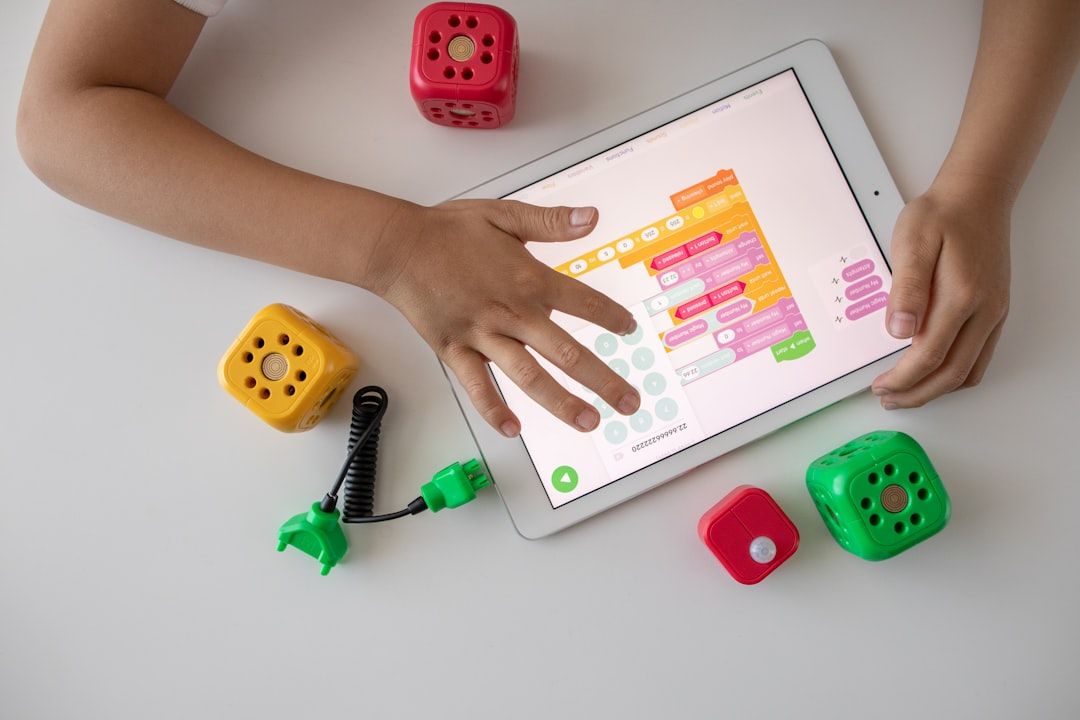
Mathematics doesn't have to be intimidating or boring. With the right approach, math can transform into an exciting adventure that sparks curiosity and builds confidence in young learners.
Fun math tricks provide a perfect gateway to help children develop a positive relationship with numbers while enhancing their computational skills.
In this comprehensive guide, we'll explore entertaining math shortcuts and techniques that make learning enjoyable for kids.
These tricks not only make math more approachable but also help children develop mental math abilities that will serve them throughout their academic journey and beyond.
TL;DR - Key Takeaways
- Fun math tricks boost engagement, confidence, and retention while making math less intimidating for children.
- Simple techniques like finger multiplication for 9s, adding from left to right, and the "butterfly method" for fractions can transform how kids approach mathematics.
- Incorporating math games, real-life examples, and visual aids significantly enhances the effectiveness of math tricks.
- Regular practice of math shortcuts develops mental math abilities and number sense that benefit children in the long term.
- A balanced approach combining fun tricks with structured learning (like Thinkster's hybrid model) creates the optimal math learning environment.
Reviewed by: Certified K-12 educators and math learning specialists at Thinkster Learning.
Key Facts at a Glance
- Math tricks create positive associations with mathematics and reduce math anxiety in children.
- These techniques are suitable for elementary and middle school students (ages 5-13).
- Regular practice of math shortcuts develops stronger neural pathways for number operations.
- Combining fun tricks with structured learning creates the most effective math education approach.
- Many math tricks have real-world applications that help children see math's relevance in daily life.
Why Should Kids Learn Math Tricks?
Quick Answer: Math tricks help children develop number sense, boost confidence, and make learning enjoyable while building critical thinking skills that extend beyond mathematics.
Before diving into specific techniques, let's understand why math tricks are so valuable for young learners.
Mathematics is often perceived as challenging or tedious by many children.
However, when presented through engaging shortcuts and tricks, it transforms into an accessible, even entertaining subject.
Benefits of Teaching Math Tricks to Kids
Quick Answer: Fun math tricks boost engagement, reduce anxiety, improve memory retention, build confidence, and develop mental math abilities that benefit children throughout their academic journey.
Increased Engagement: Math tricks turn learning into a game-like experience, capturing children's attention and interest.
Reduced Math Anxiety: By making math approachable and fun, tricks help alleviate the stress and anxiety many children associate with mathematics.
Improved Memory and Recall: The pattern-based nature of math tricks helps children remember mathematical concepts more effectively.
Boosted Confidence: Mastering quick calculation methods gives children a sense of accomplishment and builds mathematical confidence.
Developed Mental Math Skills: Regular practice with math shortcuts strengthens mental calculation abilities, reducing dependency on calculators.
Enhanced Number Sense: Understanding math tricks helps children develop a deeper intuition about how numbers work together.
Thinkster's performance guarantee demonstrates, when children engage with math through appropriate methods, they show measurable improvement in their mathematical abilities.
How Math Tricks Help Build Strong Foundations
Quick Answer: Math tricks help children understand underlying patterns in our number system, creating mental frameworks that support advanced mathematical learning later in their education.
Math tricks aren't just about speed or showing off—they actually help children develop fundamental mathematical understanding:
Pattern Recognition: Math tricks highlight patterns in our number system, helping children recognize mathematical relationships.
- Conceptual Understanding: Good math tricks don't just teach rote memorization but help children understand why certain methods work.
- Mathematical Flexibility: Learning multiple approaches to solve problems develops mathematical flexibility and adaptability.
- Preparation for Advanced Concepts: Many tricks introduce algebraic thinking and other advanced concepts in an accessible way.
National Association of School Resource Officers research shows combining enjoyment with learning creates more effective and lasting educational outcomes.
What Are the Top 10 Fun Math Tricks for Kids?
Quick Answer: The most effective math tricks for kids include finger multiplication for 9s, left-to-right addition, doubling and halving for multiplication, the butterfly method for fractions, and number bond techniques that make calculations faster and more intuitive.
Let's explore ten entertaining and practical math tricks that will engage young learners while boosting their computational skills.
Trick 1: The Finger Multiplication Trick for 9s
Quick Answer: The 9s multiplication finger trick allows children to quickly find products of 9 by using their fingers as visual aids, with the finger position indicating the tens and units digits.
The multiplication table for 9 becomes effortless with this popular finger trick:
Hold both hands out in front of you with fingers extended.
For 9 × N, bend down your Nth finger counting from the left.
Count the fingers to the left of the bent finger (tens place) and to the right (ones place).
Example: For 9 × 4
Bend your 4th finger (counting from left)
You have 3 fingers to the left and 6 to the right
The answer is 36
This trick works because the sum of digits in multiples of 9 always equals 9 (3+6=9, 2+7=9, etc.), creating a beautiful pattern that children find fascinating.
Trick 2: Adding Double-Digit Numbers Easily
Quick Answer: The left-to-right addition method simplifies adding multi-digit numbers by working with place values in a more intuitive order, starting with the largest values first.
Rather than the traditional right-to-left addition method, teach kids to add from left to right:
Add the tens places first.
Then add the ones places.
Combine the results.
Example: 26 + 35
Tens: 20 + 30 = 50
Ones: 6 + 5 = 11
Combine: 50 + 11 = 61
This approach aligns with how we naturally think about numbers and helps children better understand place value.
It's especially useful for mental math calculations where writing down and carrying can be impractical.
Discover Thinkster offers interactive exercises that reinforce these concepts.
Trick 3: The "Butterfly Method" for Comparing Fractions
Quick Answer: The butterfly method provides an intuitive visual approach to comparing fractions by cross-multiplying the numerators and denominators, making fraction comparison accessible for young learners.
Comparing fractions can be challenging for kids. The butterfly method simplifies this process:
Draw the two fractions side by side.
Cross-multiply the numerator of the first fraction with the denominator of the second.
Cross-multiply the numerator of the second fraction with the denominator of the first.
Compare the products - the larger product corresponds to the larger fraction.
Example: Compare 2/5 and 3/7
Cross-multiply: 2 × 7 = 14 and 3 × 5 = 15
Since 15 > 14, we know 3/7 > 2/5
Thinkster's GCF question library offers excellent resources on fractions and factors.
Trick 4: Multiplying by 5 with a Timer
Quick Answer: To multiply any number by 5 quickly, children can divide the number by 2 and then multiply by 10, providing a faster alternative to traditional multiplication.
Here's a clever trick to multiply any number by 5:
Divide the number by 2.
Multiply the result by 10.
Example: 18 × 5
18 ÷ 2 = 9
9 × 10 = 90
This works because multiplying by 5 is the same as multiplying by 10 and then dividing by 2 (or dividing by 2 and then multiplying by 10).
For odd numbers, a slight adaptation is needed:
Example: 17 × 5
17 ÷ 2 = 8 remainder 1
8 × 10 = 80
Add 5 (because of the remainder): 80 + 5 = 85
This trick helps children understand the relationship between multiplication and division while providing a quick calculation method.
Trick 5: Quick Square of Numbers Ending in 5
Quick Answer: To square any number ending in 5, multiply the tens digit by the next higher number and append 25 to the result, making complex squaring operations surprisingly simple.
Squaring numbers ending in 5 becomes remarkably easy with this trick:
Take the tens digit and multiply it by the next higher number.
Append 25 to the end of that result.
Example: 35²
Tens digit: 3
Next higher number: 4
3 × 4 = 12
Append 25: 1225
Therefore, 35² = 1225
Example: 75²
Tens digit: 7
Next higher number: 8
7 × 8 = 56
Append 25: 5625
Therefore, 75² = 5625
This pattern works for any number ending in 5 and introduces children to algebraic thinking through pattern recognition.
Trick 6: Number Bonds to 10 and 20
Quick Answer: Number bonds help children visualize and memorize number pairs that add up to key values (like 10 or 20), creating mental shortcuts that speed up calculation and build number fluency.
Number bonds represent relationships between numbers and are essential building blocks for mental math:
For number bonds to 10: Learn all pairs that sum to 10 (1+9, 2+8, 3+7, 4+6, 5+5).
For number bonds to 20: Learn all pairs that sum to 20 (1+19, 2+18, etc.).
These bonds create mental shortcuts when doing addition and subtraction:
Example: 37 + 8
Recognize that 7 + 3 = 10 (number bond to 10)
Rewrite as 37 + 8 = 37 + 3 + 5 = 40 + 5 = 45
Best Practices for Researchers in mathematics education highlight the importance of these foundational number relationships in developing mathematical proficiency.
Trick 7: The "Crossway" Multiplication Shortcut
Quick Answer: The crossway multiplication method offers a visual approach to multiplying two-digit numbers by breaking the calculation into manageable steps that can be performed mentally.
This technique makes multiplying two-digit numbers more accessible:
Multiply the ones digits together.
Cross-multiply the tens digit of the first number with the ones digit of the second, and vice versa, then add these products.
Multiply the tens digits together.
Combine the results according to place value.
Example: 23 × 12
Step 1: 3 × 2 = 6 (ones place)
Step 2: (2 × 2) + (3 × 1) = 4 + 3 = 7 (tens place)
Step 3: 2 × 1 = 2 (hundreds place)
Result: 276
This method breaks down a complex multiplication problem into simpler steps and helps children understand how multiplication works with multi-digit numbers.
Trick 8: The Magic of Zero in Multiplication
Quick Answer: Understanding shortcuts for multiplying by 10, 100, or 1000 helps children quickly solve calculations by simply adding the appropriate number of zeros to the original number.
Multiplication by powers of 10 follows simple patterns that kids can easily memorize:
To multiply by 10: Add one zero to the end.
To multiply by 100: Add two zeros to the end.
To multiply by 1000: Add three zeros to the end.
Examples:
43 × 10 = 430
43 × 100 = 4,300
43 × 1000 = 43,000
For multiplying by 20, 300, etc.:
Multiply by the first digit.
Then add the appropriate number of zeros.
Example: 25 × 40
25 × 4 = 100
Add a zero: 1000
This trick helps children understand place value and the structure of our base-10 number system.
Trick 9: Doubling and Halving for Multiplication
Quick Answer: The doubling and halving strategy makes multiplication easier by transforming problems into equivalent calculations that may be simpler to perform mentally.
This clever trick makes some multiplication problems much easier:
Double one factor.
Halve the other factor.
Multiply the results.
Example: 17 × 6
Double 17: 17 × 2 = 34
Halve 6: 6 ÷ 2 = 3
Multiply: 34 × 3 = 102
This works because multiplication is commutative and the changes balance each other out (2x × y/2 = x × y).
The trick is especially useful when one factor is even, and works particularly well for multiplication by 5:
Example: 18 × 5
Double 5: 5 × 2 = 10
Halve 18: 18 ÷ 2 = 9
Multiply: 9 × 10 = 90
Trick 10: Fun Ways to Understand Fractions with Paper Folding
Quick Answer: Paper folding provides a tactile, visual method for understanding fraction concepts like equivalence, addition, and comparison by creating concrete representations of abstract fraction relationships.
Paper folding is an engaging way to help children understand fractions:
Start with a rectangular piece of paper.
Fold it in half to show 1/2.
Fold it in half again to show 1/4.
Continue folding to demonstrate smaller fractions.
This hands-on approach helps children visualize:
Fraction equivalence (two 1/4 pieces equal 1/2)
Addition and subtraction of fractions
Comparing fraction sizes
The physical nature of this activity makes abstract fraction concepts concrete and memorable, especially for visual and kinesthetic learners.
How Can We Make Math Tricks More Effective and Fun?
Quick Answer: Math tricks become more effective when combined with visual aids, gamification, real-life applications, storytelling, and consistent practice in an encouraging environment.
Knowing the tricks is just the beginning. To maximize their impact, consider these strategies for implementation:
Using Visual Aids and Games
Quick Answer: Visual aids and games transform abstract math concepts into tangible experiences, making math tricks more memorable and engaging for young learners.
Visual reinforcement significantly enhances retention:
Colorful Diagrams: Create visual representations of math tricks with bright colors to highlight patterns.
Math Cards: Make flashcards for different tricks that children can practice with.
Board Games: Design simple board games where advancing requires using a specific math trick.
Digital Apps: Utilize apps that gamify math tricks through interactive challenges.
Best practice resources note that incorporating visual elements into learning significantly improves engagement and retention.
| Game Type | Math Trick Applied | Benefits |
|---|---|---|
| Speed Calculations Race | Finger multiplication for 9s | Builds speed, confidence |
| Number Bond Card Match | Number bonds to 10 and 20 | Improves memory, pattern recognition |
| Left-to-Right Addition Challenge | Adding double-digit numbers | Enhances place value understanding |
| Fraction Fold-Off | Paper folding for fractions | Develops visual understanding of fractions |
| Multiplication War | Doubling and halving | Practices multiple strategies simultaneously |
Encouraging Practice with Real-Life Examples
Quick Answer: Connecting math tricks to everyday situations makes mathematics relevant and practical, helping children see the value of these skills beyond the classroom.
Math becomes meaningful when children see its practical applications:
Shopping: Calculate discounts using the multiplication by 10 then division trick.
Cooking: Practice fractions and conversions with recipes.
Travel: Estimate distances and times using mental math tricks.
Games: Apply math tricks during board games that involve scoring or resource management.
National Alzheimer's Coordinating Center's best practices say that contextual learning creates stronger neural pathways than abstract practice alone.
Consider creating a "Math Trick of the Week" challenge where children find opportunities to use that week's trick in real-life situations and report back their experiences.
Incorporating Storytelling and Challenges
Quick Answer: Stories and challenges create emotional connections to math concepts, making math tricks more memorable while fostering a growth mindset through progressive difficulty levels.
Stories add an emotional dimension to mathematics that enhances memory:
Historical Context: Share the origins of math tricks, like how ancient civilizations used similar methods.
Character-Based Learning: Create characters who use different math tricks to solve problems.
Progressive Challenges: Develop a series of increasingly difficult challenges that apply the same math trick.
Achievement System: Establish a "Math Trick Master" certification for children who demonstrate proficiency with multiple tricks.
Research on child development indicates connecting learning to children's aspirations and interests significantly increases motivation and engagement.
How Does Thinkster Learning Support Fun & Effective Math Learning?
Quick Answer: Thinkster Learning combines AI-driven personalization with expert human tutoring to create an engaging math learning experience that incorporates fun tricks while building comprehensive mathematical understanding.
While math tricks provide excellent supplementary learning, a complete math education requires a structured approach. Thinkster Learning offers the perfect balance:
Personalized Learning Experience
Quick Answer: Thinkster's AI-driven platform analyzes each student's strengths and challenges to create customized learning paths that incorporate engaging math tricks alongside comprehensive curriculum coverage.
Thinkster's approach ensures that learning is tailored to each child:
AI-Powered Assessment: Identifies specific areas where a child excels or needs support.
Customized Learning Plans: Creates personalized learning journeys that incorporate fun math tricks alongside comprehensive curriculum.
Adaptive Difficulty: Adjusts problem complexity based on the child's progress and confidence.
Varied Learning Methods: Combines traditional problem-solving with engaging shortcuts and tricks.
Unlike one-size-fits-all programs like those mentioned in this comparison to Kumon, Thinkster adapts to each child's unique learning style and pace.
Interactive Math Activities
Quick Answer: Thinkster's platform offers interactive digital worksheets, game-based learning modules, and engaging challenges that make practicing math tricks and core concepts enjoyable for students.
Engagement is at the heart of effective learning:
Digital Worksheets: Interactive exercises that apply math tricks in varied contexts.
Game-Based Learning: Fun activities that reinforce mathematical concepts through play.
Visual Learning Tools: Animated demonstrations of math tricks and concepts.
Progress Tracking: Visual representations of improvement that motivate continued effort.
These interactive elements create positive associations with mathematics and keep children motivated to continue learning.
Expert Tutors Who Make Math Fun
Quick Answer: Thinkster's certified tutors combine mathematical expertise with engaging teaching methods, incorporating fun math tricks while ensuring students develop comprehensive mathematical understanding.
Human guidance remains irreplaceable in mathematics education:
Certified Math Experts: Knowledgeable tutors who understand both the technical aspects of mathematics and how to make it accessible.
Personalized Instruction: One-on-one guidance that adapts to each child's learning style.
Trick Integration: Tutors who know when and how to introduce shortcuts that enhance learning without sacrificing understanding.
Motivation and Support: Encouragement that builds confidence and mathematical resilience.
Educational best practice resources say the combination of personalized technology and human guidance creates optimal learning environments.
Frequently Asked Questions About Teaching Math Tricks to Kids
At what age should children start learning math tricks?
Quick Answer: Children can start learning simple math tricks around ages 7-8 when they have grasped basic number operations, though age-appropriate tricks can be introduced as early as 5-6 years old.
Most children are ready to learn basic math tricks around second or third grade (ages 7-8), once they have a solid understanding of addition, subtraction, and place value.
However, simpler tricks like number bonds to 10 can be introduced as early as kindergarten or first grade (ages 5-6).
The key is to match the complexity of the trick to the child's current mathematical understanding.
Start with visual, concrete tricks before moving to more abstract shortcuts.
Will learning math tricks prevent my child from understanding the underlying concepts?
Quick Answer: When taught properly, math tricks enhance rather than replace conceptual understanding by highlighting patterns in our number system and making calculations more accessible.
This is a common concern, but when math tricks are taught correctly, they actually enhance conceptual understanding rather than undermining it.
Explaining why the trick works (the mathematical principle behind it)
Demonstrating the traditional method first
Using the trick as a supplement, not a replacement
Connecting the trick to broader mathematical concepts
Thinkster's approach ensures that shortcuts complement rather than substitute for foundational understanding, as outlined in their performance guarantee.
How often should children practice math tricks?
Quick Answer: Ideally, children should practice math tricks for 5-10 minutes daily, with regular application in real-world situations to reinforce learning and build fluency.
Short, regular practice sessions are more effective than occasional lengthy ones:
Daily Practice: 5-10 minutes of focused practice each day
Weekly Review: A more comprehensive review once a week
Real-World Application: Regular opportunities to use tricks in everyday situations
Progressive Challenge: Gradually increasing difficulty as proficiency develops
Consistency is key to developing automaticity with these techniques, allowing children to apply them effortlessly when needed.
Can math tricks help children with math anxiety?
Quick Answer: Yes, math tricks can significantly reduce math anxiety by making calculations less intimidating, building confidence through quick successes, and creating positive associations with mathematics.
Math tricks can be particularly valuable for children experiencing math anxiety:
They provide quick successes that build confidence
They make calculations less intimidating and more approachable
The element of fun reduces stress associated with mathematics
Mastery of tricks gives children a sense of mathematical competence
Many parents report that introducing math tricks was a turning point in helping their anxious children develop a more positive relationship with mathematics.
How do I know if a math trick is helpful or just a shortcut that will confuse my child?
Quick Answer: Helpful math tricks explain the "why" behind the shortcut, connect to foundational concepts, work consistently across examples, and noticeably improve a child's calculation speed and confidence.
Evaluate math tricks based on these criteria:
Conceptual Connection: Does the trick help explain why the math works, or is it just a mechanical procedure?
Consistency: Does the trick work across various examples, or is it limited to specific cases?
Clarity: Is the trick easy to understand and apply, or does it add complexity?
Efficiency: Does the trick genuinely make calculations faster or clearer?
Engagement: Does the trick increase your child's interest and enjoyment in mathematics?
The best math tricks enhance understanding while making calculations more accessible.
If a trick seems to confuse your child or doesn't connect to broader concepts, it may be better to try a different approach.
Do schools teach these math tricks?
Quick Answer: Some schools incorporate math tricks into their curriculum, but coverage varies widely; many teachers introduce some shortcuts, while comprehensive trick instruction often comes from supplementary resources or tutoring programs.
The inclusion of math tricks in school curricula varies widely:
Some progressive math curricula explicitly include various calculation shortcuts
Many individual teachers incorporate tricks into their instruction based on personal preference
Traditional curricula may focus more on standard algorithms with fewer shortcuts
Some schools worry that tricks might interfere with standardized test preparation
This inconsistency is one reason why supplementary resources like Thinkster Learning are valuable—they can introduce beneficial tricks that might not be covered in a child's regular classroom experience.
Can adults benefit from learning these math tricks too?
Quick Answer: Absolutely! Adults can benefit significantly from math tricks for everyday calculations, building number confidence, and supporting their children's mathematical learning journey.
Math tricks aren't just for children—adults can benefit tremendously:
Practical Application: Faster mental calculations for shopping, tipping, and other daily needs
Building Confidence: Overcoming math anxiety that may have developed during school years
Supporting Children: Being better equipped to help children with their math education
Brain Exercise: Keeping mental faculties sharp through regular mathematical thinking
Many adults report that learning math tricks alongside their children creates a positive learning environment and helps them overcome their own math-related insecurities.
Conclusion
Mathematics doesn't have to be intimidating or tedious.
Through the power of fun math tricks, children can develop not only computational skills but also a genuine appreciation for the patterns and relationships that make mathematics beautiful and practical.
By incorporating these ten engaging math tricks into your child's learning routine and following the implementation strategies we've discussed, you can transform their mathematical experience from one of potential anxiety to one of discovery and enjoyment.
Remember that the goal isn't just faster calculation—it's developing number sense, mathematical confidence, and problem-solving skills that will serve children throughout their educational journey and beyond.
Math tricks are powerful tools in creating a positive mathematical foundation that can last a lifetime.
For a comprehensive approach that balances engaging shortcuts with thorough conceptual development, consider exploring Thinkster Learning's personalized math programs, where fun and fundamentals come together to create mathematical excellence.