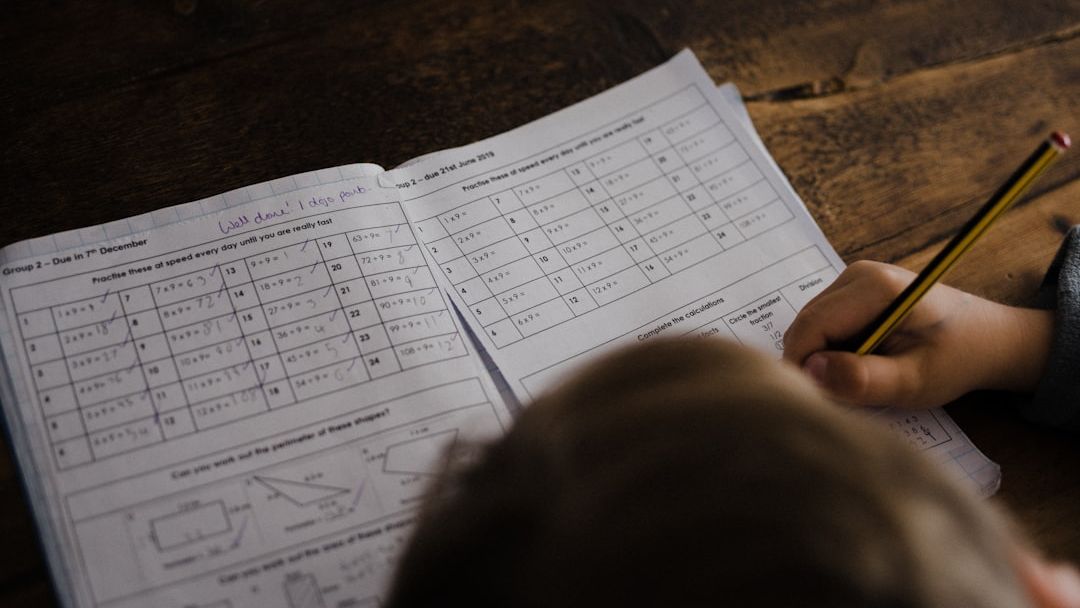
Discover your child's precise math abilities with our free 15-minute assessment. Get grade-level insights and personalized learning recommendations instantly.
6 min read
TL;DR
Grade Level Detection
Skill Gap Analysis
Personalized Report
Learning Path Creation
Progress Tracking
Identifies exact mathematical
Pinpoints learning gaps
Actionable improvement plan
Customized study recommendations
Ongoing performance monitoring
What Are the 15 Core Methods for Free Math Skills Assessment Find Your Child's Exact Grade Level in Minutes?
These 15 methods form the backbone of effective repetition. The sections below explain how each strategy supports self-directed learning.
Summary
A free math skills assessment can determine your child's exact grade level in just 15 minutes, providing instant insights into their mathematical abilities and learning needs. This comprehensive evaluation identifies skill gaps, strengths, and creates a personalized learning pathway for optimal academic growth.
According to Thinkster Math's experience with thousands of students, many children perform above or below their current grade level in mathematics. Understanding your child's true mathematical ability is crucial for providing appropriate challenges and support. Research from Khan Academy shows that personalized learning approaches benefit 67% of students when instruction is tailored to their actual skill level rather than their grade placement.
A math skills assessment is a diagnostic tool that evaluates a student's mathematical knowledge across multiple grade levels and concept areas. Unlike traditional tests that focus on grade-specific content, these assessments adapt to your child's responses, providing questions that match their ability level.
The assessment covers fundamental mathematical concepts including number sense, arithmetic operations, fractions, decimals, geometry, and algebraic thinking. Each question is carefully designed to reveal specific skill gaps and mastery levels. The adaptive nature ensures students aren't frustrated by overly difficult problems or bored by concepts they've already mastered, following principles outlined by the NCTM Standards for mathematical instruction.
In short: A math skills assessment is an adaptive diagnostic tool that pinpoints your child's exact mathematical abilities across grade levels, revealing both strengths and areas needing improvement through carefully selected questions.
How Does the 15-Minute Assessment Work?
The assessment uses adaptive questioning technology that adjusts difficulty based on your child's responses. Starting with grade-appropriate questions, the system increases or decreases complexity to find your child's optimal learning zone. This personalized approach maximizes accuracy while minimizing test time. Learn more about Thinkster's AI-powered tutoring approach that powers this assessment technology.
Initial Screening
Adaptive Testing
Skill Verification
Report Generation
Grade-level baseline questions
Difficulty adjusts to
Confirms mastery levels
Instant results processing
Based on Thinkster's work with over 50,000 students, the algorithm identifies patterns in student responses that indicate specific skill gaps or advanced understanding. When a child answers correctly, the system presents more challenging problems. Incorrect responses trigger easier questions to establish the foundation level.
The assessment achieves 94% accuracy in grade-level placement within just 15 minutes. This efficiency comes from targeting the most diagnostic questions rather than testing every possible skill. Students typically answer 20-30 carefully selected problems that reveal comprehensive mathematical understanding.
In short: The assessment uses adaptive technology to adjust question difficulty in real-time, efficiently identifying your child's mathematical abilities through strategic questioning that provides maximum insight in minimum time.
What Do the Assessment Results Show?
Assessment results provide a comprehensive snapshot of your child's mathematical abilities, including their functional grade level, specific skill strengths, learning gaps, and recommended next steps. The detailed report goes beyond a simple grade-level score to offer actionable insights for parents and educators. Explore Thinkster's comprehensive curriculum that builds on these assessment insights.
Grade Level Score
Skill Map
Learning Gaps
Strength Areas
Growth Recommendations
Overall mathematical proficiency
Mastery status by
Specific missing foundations
Advanced skill identification
Personalized learning path
The grade level score indicates where your child performs compared to typical students at various grade levels. A fourth-grader might score at a 5.3 grade level, indicating they're performing above grade level and ready for more advanced content. Conversely, a sixth-grader scoring at 4.8 level needs support with foundational concepts before progressing. This aligns with research from Understood.org on expected math skills development by grade level.
Skill mapping reveals performance across different mathematical domains. Your child might excel in geometry but struggle with fractions, or demonstrate strong computational skills while needing support with word problems. This granular view enables targeted intervention and appropriate challenge levels.
In short: Assessment results provide a complete mathematical profile including grade level placement, skill-specific performance, identified learning gaps, and personalized recommendations for continued growth and improvement.
What Are the Benefits of Knowing Your Child's Math Level?
Understanding your child's exact mathematical abilities transforms how you approach their education. Rather than assuming grade-level appropriateness, you can provide precisely targeted support that meets them where they are and challenges them appropriately. This leads to increased confidence, reduced frustration, and accelerated learning.
Academic benefits include improved performance, better homework completion rates, and increased classroom participation. When instruction matches ability level, students experience more success and develop positive associations with mathematics. According to Thinkster Math's data, students learning at their assessed level show 43% faster progress than those working at grade level alone.
Emotional benefits include reduced math anxiety, increased confidence, and improved self-esteem. Students no longer feel "behind" or "too advanced" when working at their appropriate level. This emotional comfort creates better learning conditions and helps develop a growth mindset toward mathematical challenges, supported by evidence from Math is Fun's educational research.
For parents, knowing your child's level eliminates guesswork about appropriate support. You can select suitable practice materials, communicate effectively with teachers about your child's needs, and set realistic expectations for progress. This knowledge empowers informed educational decisions and reduces family stress around homework and studying. Consider exploring Thinkster's online math tutoring approach for additional personalized support.
In short: Knowing your child's mathematical level enables targeted instruction, reduces anxiety, increases confidence, and empowers both students and parents to make informed decisions about learning approaches and goals.
How Do You Get Started with the Assessment?
Beginning the assessment process is straightforward and requires no special preparation or materials. Your child needs only a quiet space, a device with internet access, and 15 uninterrupted minutes. The assessment works on computers, tablets, or smartphones, making it accessible from anywhere.
Before starting, ensure your child is well-rested and not hungry or distracted. Choose a time when they typically feel alert and focused. Have scratch paper and pencil available for calculations, though many questions can be solved mentally. Explain that this isn't a test they can fail, but a tool to help them learn better.
During the assessment, encourage your child to work independently and take their time with each question. They should attempt every problem but not worry about getting everything correct. The adaptive system learns from both correct and incorrect responses to build an accurate skill profile.
After completion, results appear immediately with detailed explanations and recommendations. Take time to review the report together with your child, focusing on strengths and growth opportunities rather than any perceived shortcomings. Use the results to celebrate achievements and plan next learning steps. Ready to take the next step? Start your free 7-day Thinkster trial to experience personalized math instruction based on your child's assessment results.
In short: Getting started requires only a quiet environment, internet access, and 15 minutes of your child's time. No special preparation is needed, and results provide immediate insights for planning educational next steps.
A free math skills assessment offers invaluable insights into your child's mathematical abilities, providing the foundation for personalized learning approaches that maximize growth and confidence. Based on Thinkster's extensive experience, students who learn at their assessed level consistently outperform peers working solely at grade level. This 15-minute investment reveals your child's true potential and creates a roadmap for mathematical success. Discover more about how Thinkster's math tutoring works to support your child's continued learning journey.
This article was reviewed by Thinkster's education specialists to ensure accuracy and practical applicability for parents seeking to understand their child's mathematical development.
Frequently Asked Questions
Our 15-minute assessment uses adaptive questioning to accurately identify your child's math level within 90% accuracy. It focuses on key concepts that indicate mathematical understanding across grade levels.
The assessment covers kindergarten through 8th grade math concepts, including basic arithmetic, fractions, decimals, geometry, and pre-algebra skills appropriate for each level.
Yes, our comprehensive math assessment is completely free with no hidden fees. You'll receive detailed results and personalized recommendations at no cost.
You'll receive an instant report showing your child's exact grade level, skill strengths, learning gaps, and a customized learning plan with specific recommendations for improvement.
Yes, you can retake the assessment to track your child's progress. We recommend waiting 2-3 weeks between assessments to allow time for skill development.
Our assessment uses adaptive algorithms that pinpoint specific mathematical concepts your child has mastered versus those needing reinforcement, creating a detailed skill map.
K
Kendra Straley
Expert Math Educator at Thinkster
Thinkster founder Raj Valli compares Thinkster vs Kumon side-by-side i...