Loading…
Math Help for 3rd Graders: What Parents Need to Know (2026)

Recommended Articles
Loading…
Last Updated on Mar 13, 2026
3rd grade math struggles with place value and word problems? Here's how to help your child build confidence and mastery. Strategies from K-8 educators.
Your child brought home a math worksheet, and after 20 minutes of struggle, frustration tears start flowing. They say, "I don't get it. I'm bad at math."
You feel helpless. You try explaining it differently, but the more you explain, the more frustrated they become. Meanwhile, your own anxiety rises: Am I making it worse? Will they fall behind? Should we get a tutor?
Third grade is where math breaks down for thousands of kids—not because they're incapable, but because third grade is when math shifts from concrete to abstract. Suddenly, numbers aren't about "things you can count." They're about concepts like place value (why is 23 different from 32?), multiplication (why does 3 × 4 equal 4 × 3?), and word problems that require multiple steps. Your child's brain is ready for this shift, but their confidence often isn't.
The good news: math help for 3rd graders that focuses on confidence and understanding (not just answers) changes everything. Within weeks, you'll see a shift from "I can't" to "I'll try."
This guide shows you exactly how.
Third grade is the critical "math wall" year. Here's what happens developmentally:
The Concrete-to-Abstract Shift
In K-2nd grade, math is concrete. Kids count objects, use manipulatives, see visual representations. But in 3rd grade, they must think abstractly. "23" is no longer "twenty small blocks and three small blocks." It's a number representing tens and ones—a concept that lives only in the mind, not in the hand.
This jump catches many kids off guard. And it catches parents off guard too, because you can't just "show" understanding anymore. Your child has to construct it mentally.
Why Parents Feel Inadequate
When your child struggles with place value or word problems, you might think, "I should be able to explain this." But here's the secret: explaining is often what makes it worse. When you explain, your child becomes a passive listener. When they construct understanding through guided exploration, they own it.
Many parents feel anxious about math themselves and try to solve this by explaining more clearly. But the problem isn't clarity—it's approach. Your child needs to see, manipulate, and apply math, not just hear explanations. Research shows that parental math anxiety can be inherited, which is why modeling a growth mindset matters more than perfect explanations.
The Identity Risk
Most critically: 3rd grade is when children form lasting beliefs about math. A child who struggles in 3rd grade and receives the wrong kind of help often decides, "I'm not a math person." This identity, once formed, predicts math achievement through high school more accurately than any single test score.
That's why the strategies below aren't just about teaching math facts. They're about building the belief: "I can figure this out."
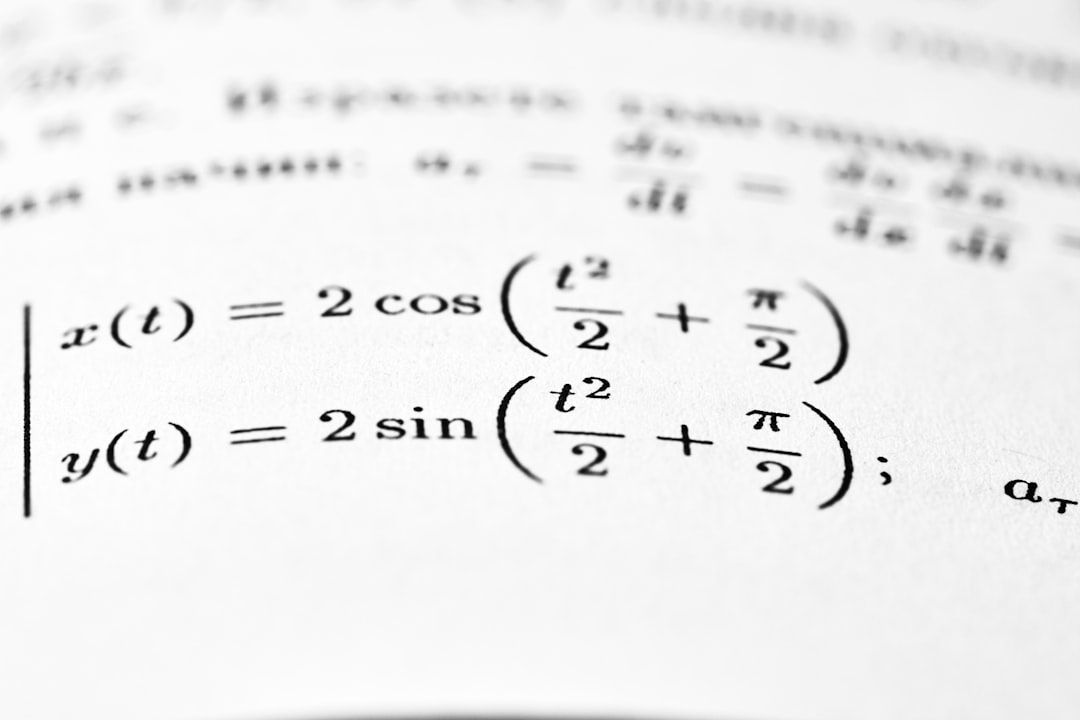
Visual tools—such as number lines, base-10 blocks, place value charts, and bar models—translate abstract mathematical symbols into images. When a child sees 23 represented as 2 tens and 3 ones (rather than just the symbols), the concept of place value becomes concrete and memorable.
Why this works: Research from the Concrete-Representational-Abstract (CRA) model shows that children who see math before they abstract it achieve significantly faster mastery (Witzel et al., 2003). The visual representation is the bridge between the tangible (physical blocks) and the abstract (the symbols 23).
How to use it at home:
- Buy base-10 blocks (cheap on Amazon) and let your child see what 23 looks like: 2 long rods (tens) and 3 cubes (ones)
- Draw number lines for addition/subtraction ("Start at 15, count up 7")
- Use bar models for word problems (visual rectangles representing quantities in the problem)
- Spend 5–10 minutes on visuals before moving to abstract symbols
Key insight: Your child needs to see math before they can think about it abstractly.
If visual tools are the bridge, manipulatives—physical objects your child can touch and move—are the foundation. Kids learn by touching. When your child can hold blocks, move them around, and feel how 3 groups of 5 makes 15, the concept sticks. Worksheets alone? They forget by tomorrow. But if they've felt it, they own it.
Why this works: Multi-sensory learning creates more neural pathways than passive reading. When kids see, touch, and move objects, their brains encode information more deeply and durably.
How to use it at home:
- For multiplication: Use beans/blocks in rows and columns. "How many groups of 3 can you make with 12 beans? Now rearrange them into groups of 4. How many groups of 4?" (They discover 3 × 4 = 4 × 3)
- For place value: Use coins (pennies and dimes) to show tens and ones. $0.23 is 2 dimes and 3 pennies.
- For fractions: Use a pizza cut into slices, Lego pieces, or play-dough divided into equal parts.
- For word problems: Act them out. "If you have 12 cookies and want to share them equally among 3 friends, how many does each friend get?" Then physically divide the cookies.
Key insight: Touch makes abstract concepts tangible and memorable in ways explanations never can.**
Here's what separates confident math kids from struggling ones: confident kids see math everywhere. They understand why math matters. When math is disconnected from their world, it feels pointless. When it's connected, it becomes obvious.
Why this works: The brain's relevance detector activates when learning connects to the child's life. Research shows that math with real-world context transfers better to new problems and creates stronger retention than worksheets alone (National Research Council, 2005).
How to use it at home:
- Cooking: "This recipe makes 12 cookies but we're only 2 people. Can we make half the recipe? That's 1/2." Measure fractions, double recipes, calculate cooking times.
- Shopping: "This game costs $29.99. Do we have enough with $40? How much change?" Practice subtraction, money concepts.
- Sports: "You made 7 out of 10 basketball shots. What percent is that?" Introduce percentages, averages, simple statistics.
- Video games: Many games require multiplication, geometry, strategy. Notice and name the math happening.
- Money: Allowance, birthday gifts, savings goals—all are real-world math with emotional relevance.
The key: Let your child see and experience the math first. Explain it second. When they're dividing cookies into equal groups, they're doing division. Then you can say, "That's called division."
Key insight: Math that matters to your child's life is infinitely more memorable than math on a worksheet.
Practice matters—but here's what parents get wrong: they either do too much (homework + extra worksheets = burnout) or the wrong kind (drilling the same problem over and over = no transfer).
Systematic practice differs from random drilling. It means: (1) spacing practice over weeks, not cramming in one day; (2) interleaving (mixing different problem types) rather than blocking (all multiplication, then all division); and (3) gradually removing scaffolds (help) as confidence grows.
Why this works: The spacing effect (Cepeda et al., 2006) shows that distributed practice outperforms massed practice by 2.5x. Spacing creates stronger, more retrievable memories. Your brain has to work harder to retrieve information when practice is spread out—and that work is what builds long-term memory.
How to use it at home:
- Instead of: 20 multiplication problems every day (all 6s)
- Do this: 5 different types of problems, 3x/week (mix multiplication, word problems, visual problems)
- Instead of: Drilling facts until your child is frustrated
- Do this: Practice until they get 3 correct in a row, then stop (even if only 5 minutes). Come back tomorrow.
- Use a mix: Some days use flashcards, some days use apps, some days use real objects. Your child's brain needs variety to transfer knowledge.
Pro tip: Thinkster's AI does this automatically—adjusting difficulty in real-time so your child stays in the "productive struggle" zone. Not too easy (boring), not too hard (frustrating). This is exhausting to manage manually, which is why many parents burn out.
Key insight: Spacing practice over weeks beats cramming it in one day. Quality beats quantity every time.

Here's the most powerful insight: how you praise your child shapes their belief about math.
When you say, "You're so smart at math!" you're praising ability. The unintended message? "If you struggle, you're not smart." When you struggle in the future (and you will—that's how learning works), you give up.
When you say, "I saw you stick with that problem for 5 minutes. That's the kind of thinking that makes you better," you're praising effort. The message: "Struggling is how you get smarter." This activates growth mindset.
Why this works: Praising effort (not ability) activates growth mindset, which predicts long-term achievement more than IQ (Dweck, 2006). Children who believe they can improve through effort demonstrate greater persistence on challenging problems and show stronger long-term learning gains.
How to use it at home:
- ❌ Never: "You're so smart at math!"
- ✅ Instead: "I saw you try three different approaches. That's problem-solving."
- ❌ Never: "If you can't do this easily, you're not a math person."
- ✅ Instead: "This is hard right now. But hard is where your brain grows."
- ❌ Never: "You got it wrong. Here's the right way."
- ✅ Instead: "You got it wrong. Let's figure out where your thinking went sideways. What do you think happened?"
- ❌ Never: (silence when your child struggles)
- ✅ Instead: "This is tough. I'm proud you're not giving up."
Also—and this is critical—model this language about your own struggles. If your child hears you say, "I was never good at math," they inherit that belief. Instead, say: "Math was hard for me until I understood how to think about it. Now it makes sense."
Key insight: Your child's belief about their own ability is shaped not by their talent, but by how you respond to their effort.
These are the specific concepts that often trip up 3rd graders. If your child struggles with any of these, the strategies above target them directly.
1. Place Value Confusion
The struggle: Child can't explain why 23 ≠ 32, or counts by ones instead of understanding tens.
The fix: Use visual tools (base-10 blocks, number lines) so they see the difference. Manipulatives (moving tens and ones) so they feel why order matters.
2. Multiplication Facts
The struggle: Child hasn't automatized times tables. They count on fingers or take 30 seconds per problem.
The fix: Use real-world connections first (groups of objects), then systematic, spaced practice. Flashcards work—but only after conceptual understanding is built. Don't skip the understanding phase.
3. Multi-Step Word Problems
The struggle: Child can do single-step problems ("5 + 3 = ?") but gets lost in word problems with multiple steps.
The fix: Teach with bar models (visual rectangles representing the problem). Start with real objects (act it out). Gradually move to drawings, then symbols. Build the habit of asking the problem back ("What is this problem asking?") before solving.
4. Fractions Introduction
The struggle: Abstract concept without visual anchor. Child thinks 1/3 means "one" not "one of three equal parts."
The fix: Use real objects first (pizza, pie, chocolate bars). Cut, divide, share. Use consistent visual representations (fraction strips, area models). Build the foundational understanding that fractions are parts of a whole.
You don't need to be a mathematician to track progress. Look for these signs of growth:
Signs Your Child IS Improving:
- Increased willingness to try hard problems (not giving up immediately)
- Spontaneous use of strategies ("I'll draw a picture to help me understand")
- Explaining their thinking unprompted ("Here's how I got that answer")
- Reduced frustration (30-minute tantrums become 10-minute struggles become 5-minute focused work)
- Identity shift ("I'm figuring this out" instead of "I can't do it")
When DIY Help Isn't Enough (6 Warning Signs):
If you've implemented these strategies for 6–8 weeks and see any of these, professional assessment is wise:
1. Persistent frustration – Despite your best efforts, math sessions consistently end in tears
2. Avoidance – Your child actively refuses math or creates distractions to avoid it
3. Negative identity – Child says things like "I'm bad at math" or "I'm not a math person"
4. Time burden – 30+ minutes on 10 problems, with still no understanding
5. Math anxiety – Physical symptoms (stomach aches, avoidance, shutdown) around math
6. Grade-level gap – Falling behind benchmarks by more than one month
At this point, a tutor can do what you can't: diagnose the exact conceptual gap and provide expert instruction while you handle encouragement.
This is whereAI-driven tutoringexcels. Thinkster's PrediQt.AI maps how your specific child thinks—not just what they got wrong—then a certified human tutor coaches them toward understanding. Within weeks, you'll see the shift from "I can't" to "I can."
Here's what most tutoring companies miss: the problem isn't usually math. The problem is confidence.
A child with shaky facts but strong confidence will catch up fast. A child with strong facts but weak confidence will avoid math forever. Confidence is the load-bearing wall of math achievement.
Your Math Mindset Matters
This is the uncomfortable truth: if you feel anxious about math, your child absorbs that. Research shows that parental math anxiety is a stronger predictor of child math anxiety than the child's own ability. Your mindset is inherited.
But here's the flip side: if you model curiosity and persistence, your child inherits that too.
The best thing you can do for your child's math confidence isn't explaining better. It's changing your language around math:
- Instead of: "I was never good at math"
- Say: "I'm learning how to think about math differently now"
- Instead of: "Just follow the steps"
- Say: "Let's figure out why these steps work"
- Instead of: "This is too hard"
- Say: "This is hard right now. Let's break it down."
Your child is watching you. They're learning not just math, but how to respond to struggle. Model the growth mindset you want them to have.
Why are these five strategies so powerful? Because they're grounded in how children actually learn:
1. Visual Tools rely on the Concrete-Representational-Abstract (CRA) model. Research shows that children who see math before they abstract it achieve significantly faster mastery (Witzel et al., 2003).
2. Manipulatives engage multi-sensory learning. When kids touch, see, and move objects, they create more neural pathways than passive reading (Sella et al., 2016).
3. Real-World Connections activate the brain's relevance detector. Students with math embedded in real contexts show stronger transfer to new problems and better long-term retention (National Research Council, 2005).
4. Systematic Practice (spaced repetition) outperforms massed practice significantly (Cepeda et al., 2006). Spacing creates stronger, more retrievable memories.
5. Effort Praise shapes growth mindset, which predicts long-term achievement more than IQ (Dweck, 2006).
These aren't just good ideas. They're science-backed, classroom-tested strategies that work.
If you've tried these strategies consistently and your child is still struggling, here's what to expect from professional tutoring:
What a tutor does that you can't:
- Diagnoses the exact misconception (not just "multiplication is hard" but "she thinks 6 × 4 is 24 because she counts by 6s")
- Teaches using methods optimized for your specific child's learning style
- Provides daily feedback and adjustment (vs. weekly or none)
- Removes the parent-child emotional dynamic that sometimes blocks learning
- Tracks micro-progress (weekly) so you see momentum building
Why Thinkster works for 3rd graders:
- Singapore Math-aligned curriculum with three core pillars: computational fluency, creative thinking, and critical thinking
- PrediQt.AI maps how your child thinks (not just what they get wrong)
- Certified tutors teach using Socratic questions (building understanding, not just answers)
- Daily practice is adaptive (always in the productive struggle zone)
- Parent dashboard shows exactly what your child learned today and where they're struggling
- Flexible pricing starting at $64/month annual, $100/month monthly
- Performance Guarantee on 12 and 18-month plans: if your child completes all required activities and doesn't show measurable improvement after 6 months, you get a full refund
Your child's 3rd grade math year will set the trajectory for the next decade. Getting support—whether from these strategies or a tutor—now prevents years of avoidance and anxiety later.
**Get Your Free Math Health Report →*See your child's exact math strengths and gaps in 15 minutes. No commitment, completely free.*
---
Q: What is the most important math skill for 3rd graders?
Place value and multiplication facts are foundational. But more important than any single skill is building the belief "I can figure this out." 3rd grade is where children form lasting attitudes about math. A child with strong confidence but shaky facts will catch up. A child with weak confidence will avoid math forever.
Q: My child is good at reading but hates math. Is that normal for 3rd grade?
Yes. Many strong readers struggle with math in 3rd grade because math requires different thinking—reading is about decoding words, but math is about abstract logic. This gap is especially common when multiplication and place value don't "click." The good news: confidence-building interventions close this gap quickly. It's not about talent; it's about the right teaching approach and consistent encouragement.
Q: How can I tell if my child needs a tutor, not just more homework help?
If your child has been using these strategies for 6–8 weeks and still shows frustration with core concepts (place value, times tables), it may be time for expert assessment. A tutor can diagnose why the concept isn't clicking—whether it's a learning gap, confidence issue, or teaching method mismatch. [This is where AI-driven tutoring excels](/blog/best-online-math-tutoring-for-kids-10-programs-compared-2026), because it identifies the exact block and addresses it with personalized instruction.
Q: I'm not good at math myself. Can I still help my child?
Absolutely. In fact, your mindset matters more than your math ability. Children absorb their parents' attitudes about math. Research shows that parental math anxiety is a strong predictor of child math anxiety. Instead, use the strategies above to help your child see how they learn, and model curiosity over mastery: "Let's figure this out together." If you need backup, a tutor can handle the explanation while you handle the encouragement.
Q: What's the difference between a math tutor and online practice apps?
Apps like Khan Academy and IXL are great for practice, but they don't adapt when your child gets stuck—they just show the answer or move on. A human tutor can diagnose why your child is stuck, ask Socratic questions to guide thinking, and provide daily feedback. [Thinkster combines both](/blog/online-vs-in-person-math-tutoring): AI pinpoints the gap, and a human tutor teaches the concept through live coaching. This hybrid approach is why 94% of Thinkster students see real improvement.
Q: When should I start worrying about 3rd grade math struggles?
If by mid-3rd grade (January/February), your child consistently avoids math, expresses frustration, or takes 30+ minutes on 10 problems, it's time to act. Early intervention—before frustration hardens into "I'm not a math person"—is significantly more effective. This is the age where math confidence forms. A few months of proper support prevents years of struggle.
Q: Are there red flags I should watch for?
Watch for: (1) Avoidance ("I don't want to do math"), (2) High frustration after minimal effort, (3) Negative identity formation ("I'm not a math person"), (4) Spending 30+ minutes on short assignments, (5) Math anxiety that appears physical (stomach aches, reluctance), (6) Falling behind grade-level benchmarks by a month or more. If you see 2+ of these, getting professional assessment is wise, not excessive.
Q: Can my child "catch up" if they're behind now?
Yes—and the sooner the better. 3rd grade gaps (especially place value and multiplication) compound in 4th, 5th, and beyond. A child who's behind in multiplication facts will struggle with division, fractions, and algebra. But with focused intervention in 3rd grade, catch-up happens fast. [Thinkster students typically gain 2.3 grade levels in 6 months](/blog/how-much-does-math-tutoring-actually-cost-complete-2026-price-guide) when they start behind.
The key is addressing the root misconception (not just drilling answers) and rebuilding confidence.
Expert Math Educator at Thinkster
Compare Kumon, Mathnasium & Thinkster side by side: teaching methods, ...
Online vs in-person tutoring: Honest comparison of cost, flexibility, ...
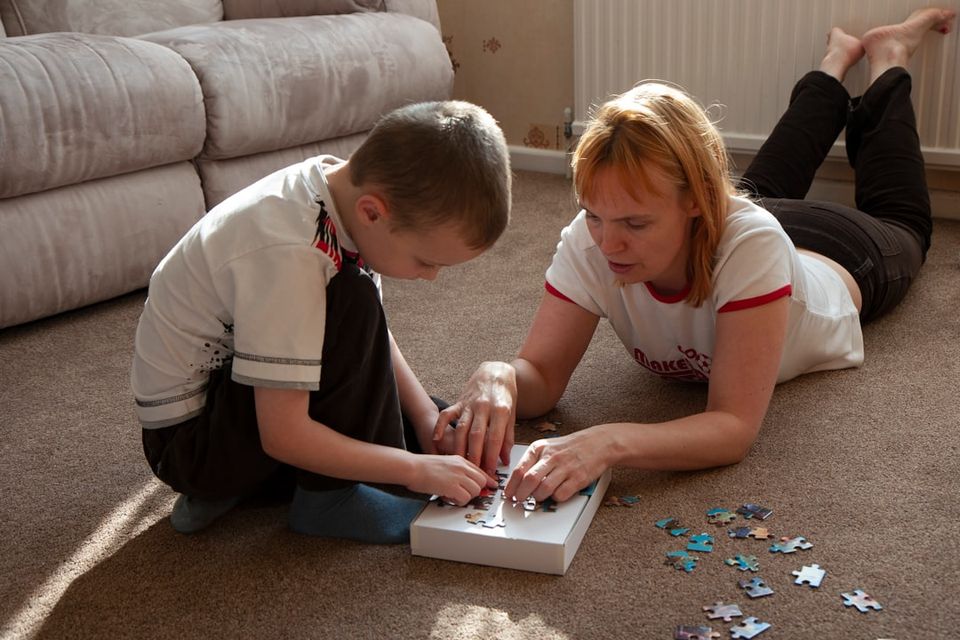
Parental support is the #1 predictor of math success—more than IQ. Her...